Icons · Fashion History
The White T-Shirt: How Underwear Became the Most Worn Garment on Earth
Issued to sailors in 1913 and still hidden under shirts thirty years later, the white T-shirt went from underwear to uniform of rebellion in a single decade — and barely changed since.
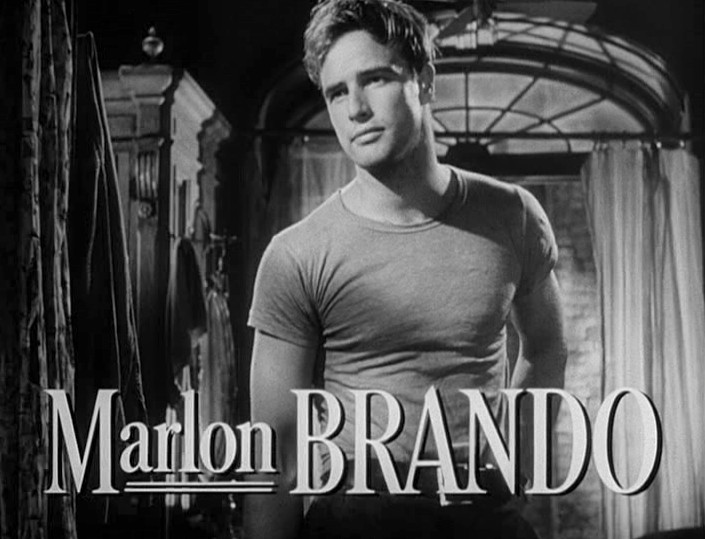
Marlon Brando was not supposed to look like that. When he lumbered across the screen in A Streetcar Named Desire in 1951, the leading man of Hollywood’s newest hit was dressed in what every American in the audience recognized immediately as underwear. A plain, short-sleeved cotton shirt, the kind you put on under your real clothes. And yet there he was, Stanley Kowalski, wearing it in a New Orleans flat, shouting “Stella!” into the night, and somehow making it the most dangerous thing a man could put on.
That was the moment the T-shirt stopped being underwear. But the stranger part of the story is what came before — and how little has changed since.
A garment that didn’t want to be seen
The T-shirt began its life as half of a onesie. In the late nineteenth century, working men in America wore a one-piece undergarment called the union suit: a buttoned-up, long-sleeved, long-legged thing that kept you warm and kept your clothes clean. It was practical in winter and miserable in summer, so laborers started cutting theirs in half at the waist and tucking the top into their trousers.
Manufacturers noticed. The Cooper Underwear Company began selling the top half on its own, no buttons, a stretchy shirt you pulled over your head. They marketed it to single men as a “bachelor undershirt,” on the logic that a bachelor had no wife to sew his buttons back on.
In 1913 the U.S. Navy made the short-sleeved, crew-neck white cotton undershirt part of its standard kit. Sailors wore it beneath their uniforms, and for nearly thirty years that is where it stayed. Hidden. During the Second World War, photographs of American GIs working shirtless in the Pacific heat began to circulate back home, and the white undershirt crept toward daylight — but only as workwear, the thing you wore to dig a trench, not the thing you wore down Main Street.
The name arrived slowly. The word “T-shirt” entered the Merriam-Webster dictionary in 1920, the same year F. Scott Fitzgerald used it in This Side of Paradise, describing a student’s packing list. The shape gives the name: laid flat, it forms a T.
Brando, then Dean
What Hollywood did next was not planned by any designer or marketing department. In A Streetcar Named Desire, Brando’s Stanley is crude, physical, working-class — the opposite of the polished Southern gentlemen the movies usually served up. His undershirt was the whole point. It said this man does not care what you think of him. Audiences had never seen a romantic lead dressed like a man who had just rolled out of bed, and they could not look away.
The reaction was immediate, and split along a generational line. Parents worried their teenagers would copy the “slovenly” look. Some schools banned the T-shirt as outerwear, and a few restaurants refused to serve men who wore one. Teenagers did the opposite of what they were told, as teenagers do.
Four years later, James Dean finished what Brando started. In Rebel Without a Cause (1955), Dean’s Jim Stark wore a white T-shirt, blue jeans, and a red windbreaker — a costume that was not thrown together, but studied. The film’s costume designer, Moss Mabry, reportedly spent days in Los Angeles high schools watching what real students wore, and borrowed from a Life magazine photograph of college kids. The point was that the outfit looked like it belonged to a teenager, not to a Hollywood wardrobe department.
Dean died in a car crash less than a month before the film came out, which sealed the look in amber. He never aged out of it. The white T-shirt and jeans became the uniform of a generation that wanted, above all, to not look like their parents.
Why it stuck
Most garments peak and fade. The white T-shirt did neither. It simply kept expanding its territory.
By the 1960s it had become a blank surface, and printing technology turned it into a billboard. Band names, political slogans, protest messages, souvenir towns. The shirt that was once too plain to be seen in public became the cheapest way to say who you were. Andy Warhol screen-printed it into art. Every subculture that came after claimed it: punks, skaters, rappers, tech founders.
What is remarkable is that the shirt itself never changed. The crew neck, the short sleeves, the T shape — all of it dates to that 1913 Navy undershirt. A white T-shirt you buy today is, in cut and construction, nearly the same object a sailor was issued over a century ago.
There are two reasons it lasted. First, it is the most democratic garment ever made. It costs almost nothing, fits any body, suits any age. A billionaire and a teenager can wear the same white shirt, and neither looks out of place. Second, it carries no message at all — which means it can carry any message. That is the trick. A plain white T-shirt is simultaneously the most neutral thing in your wardrobe and the most loaded.
The strangest thing about it
Here is what I keep coming back to. The white T-shirt was designed to be invisible, disposable, and identical for everyone. Hidden under a uniform, washed, replaced. Instead it became the most visible, most personal garment most of us own.
No one sat down and decided this. No fashion house claimed it, no designer stamped it with a name. It moved from underclothes to cultural shorthand through a war, two movie stars, and the stubborn refusal of a lot of teenagers to put a collar on.
Put one on tomorrow morning and notice what you are actually doing. You are wearing something a sailor in 1913 would recognize. It is probably the oldest thing in your closet, and you never think about it at all. That is the whole achievement.
A plain white tee, the way it was meant to be worn.
T-ShirtHollywood1950s